Supporting climate projects
In which countries does GLS support climate projects?
Since 1 April 2026, companies operating under the GLS trademark in the following countries have in place initiatives finance climate projects, through the acquisition of 'carbon credits'.*
- Belgium (only parcel, freight shipments not included)
Further, since 1 April 2026, the companies in the following countries operating under the GLS trademark, offer to clients a contribution service**:
- Austria
- Germany
- Netherlands
- Portugal
- Spain
*The volume of purchased carbon credits is calulated with reference to the respective company's Scope 1, 2 and 3 emissions, determined according to the GHG Protocol,The Basis of Reporting provides further details on GLS‘ assessment of the GHG calculation.
**This service is available upon customer’s individual request and finances climate projects in a volume calculated on the basis of the number of the customer’s parcel and freight deliveries multiplied by the value corresponding to the average CO2/parcel for the relevant country.
How does GLS countries finance these projects?
We cooperate with ClimatePartner GmbH, Munich (“ ClimatePartner ”) to channel investments in climate projects. See below: “ In which climate projects does GLS invest during 1 April 2026 and 31 March 2027?”
How does the program actually work?
Climate projects aim to reduce or avoid greenhouse gas emissions, for example by financing renewable energy projects of third-party communities and protecting rainforests from deforestation. The climate projects listed here are certified according to international standards, such as Verified Carbon Standard (VCS) or Gold Standard (GS) and are regularly verified by independent third parties. See below: " What does the certification standard of the climate projects mean? "
ClimatePartner purchases the Verified Emission Reductions (VERs) generated by climate projects in the amount calculated annually with reference to the relevant GLS emissions.
Based on these VERs, ClimatePartner in turn issues, for the above-mentioned GLS countries and GLS customers that request the contribution service, its own certificates which certify the amount of emissions indicated in the certificate have been retired on their behalf.
The following timeline provides a detailed overview of the GLS process from the purchase of carbon credits with Climate Partner to the issuance of certificates:
From purchasing carbon credits to issuing certificates - Exemplary process for 1 April, 2026 until 31 March, 2027
The exact times may vary slightly.
In which climate projects does GLS invest during 1 April, 2026 and 31 March, 2027?
We are investing in third-party projects outside our value chain. See below: " What is the difference between avoidance and removal carbon credits?"
| Project Region and Country | Project type | Certification Standard |
Supported climate projects that avoid emissions from being emitted into the atmosphere: | ||
| Guttigoli, India | Solar energy | Gold Standard VER (GS VER) |
| Gadhsisa, India | Wind energy | Gold Standard VER (GS VER) |
| Gia Lai, Vietnam | Wind energy | Gold Standard VER (GS VER) |
| Gyapa, Ghana | Cook stove | Gold Standard VER (GS VER) |
| Supported climate projects that enhance the removal of emissions from the atmosphere: Volume exclusively used by GLS Germany. | ||
| Vichada, Colombia | Afforestation | Gold Standard VER (GS VER) |
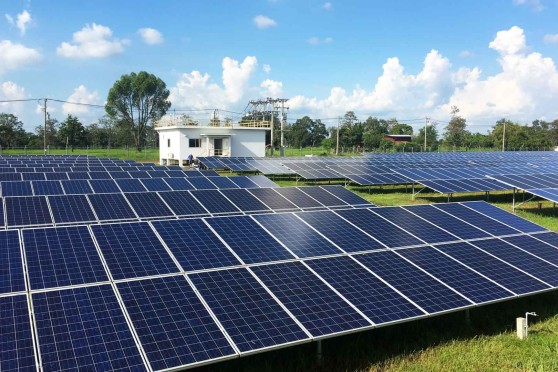
Solar energy in Guttigoli, India
This project in Guttigoli village, India, generates affordable power from a 100 MW solar plant for the Indian national grid, reducing reliance on fossil fuels and preventing greenhouse gas emissions from fossil fuel based thermal power stations.
Beyond renewable electricity, the project supports the development in local communities by providing books, furniture, and other infrastructure to underfunded schools. It also organizes music and talent events to promote extracurricular development for school children.
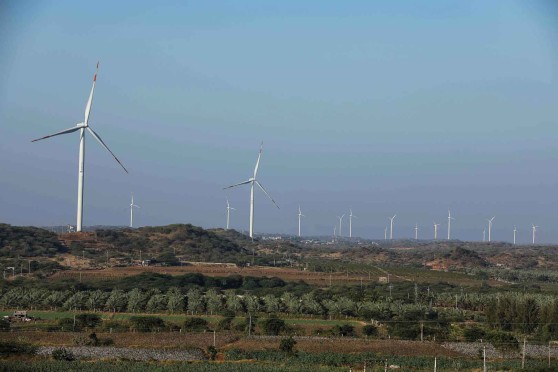
Wind energy in Gadhsisa, India
This project generates energy with 143 wind turbines, which corresponds to a total capacity of 300 MW. It contributes to climate protection, as fossil fuel power plants would have otherwise generated the amount of energy. In addition, the region's development is supported through the creation of jobs in conjunction with training and the promotion of education, such as the opportunity for students to attend local schools. The project is GS VER certified .
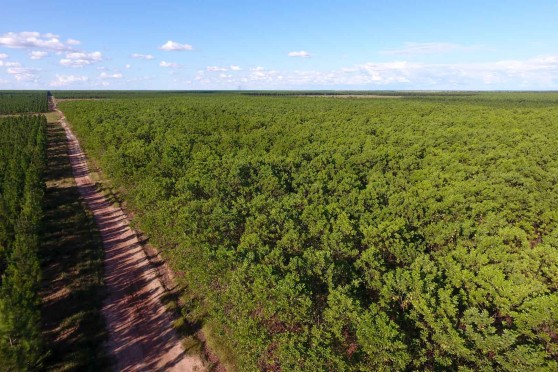
Reforestation in Vichada, Colombia
This project in Vichada, Colombia, combines forest management with ecosystem restoration. It promotes afforestation and reforestation activities for high-quality timber production while supporting the region's biodiversity, water balance, and soil stability.
Afforestation covers about 13,000 hectares, and 8,000 hectares are designated for forest conservation, supporting the natural CO2 storage capacity of trees. Thereby, healthy ecosystems can develop, their inter-connectivity is ensured and the habitat of many plant and animal species is protected.
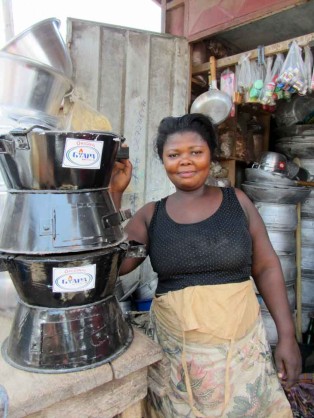
Better cookstoves in Gyapa, Ghana
In Ghana, many families traditionally cook with wood or charcoal on inefficient "Coal Pots". High fuel consumption is one of the main causes of deforestation. In addition, charcoal is produced in a simple and emission-intensive way. The Gyapa Improved Cookstove Project replaces these with efficient Gyapa stoves, which absorb and store heat better through ceramic cladding, resulting in 50-60% less fuel consumption and reduced cooking time.
The project also improves air quality in homes, benefiting women and children in particular, and supports local manufacturing. According to the project developer, over 835,000 stoves have been sold, improving the lives of more than 4 million people in Ghana.
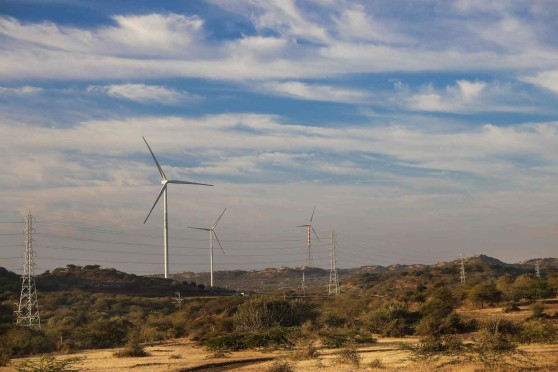
Wind energy in Gia Lai, Vietnam
With a long coastline of more than 3,260 km, Vietnam has great potential for generating renewable energy through its seas and wind. The Nhon Hoa 2 Wind Power Project in Gia Lai aims to harness this potential by generating renewable energy through wind power.
The project has a total installed capacity of 50 MW, consisting of 10 wind turbines of 4.2 MW capacity and two wind turbines of 4 MW capacity, all connected to the national grid. This will partially substitute the electricity currently evacuated into the grid by the thermal power plants, thus contributing to an overall sustainable development of the region on social, environmental and economic levels.
What does the certification standard of the projects mean?
The supported projects meet the Gold Standard (GS) or Verified Carbon Standard (VCS) in conjunction with the Climate, Community and Biodiversity Standard (CCBS). See table from previous sections.
The GS (developed by WWF and other environmental organizations) and VCS (developed by the non-governmental organization VERRA) are standards for voluntary emissions trading. Climate projects can be verified and certified by the VCS and GS based on their respective criteria and requirements (e.g. the criterion of additionality).
The Verified Carbon Standard (VCS) is a widely recognized global standard for certifying greenhouse gas emissions reduction and removal projects. It provides a framework to ensure the accuracy, transparency and credibility of climate projects, which generate carbon credits or carbon reductions (VERs) that can be traded in carbon markets. The VCS can be combined with the Climate, Community and Biodiversity Standard (CCBS), which is an additional standard and focuses on social and further environmental aspects.
The Gold Standard (GS) is another internationally recognized standard for certifying climate projects. What sets it apart is its strong focus on co-benefits, such as social and environmental impacts in addition to emissions reductions. Projects certified under the Gold Standard adhere to rigorous criteria covering, among others, additionality and independent verification.
What is the difference between avoidance and removal carbon credits?
Avoidance carbon credits are derived from climate projects that prevent potential carbon emissions from being released into the atmosphere. For example, renewable energy projects that replace fossil fuel-based electricity sources help avoid future emissions.
Removal carbon credits are generated by climate projects that remove already emitted carbon emissions from the atmosphere and store them for an extended period of time. An example of such a project is reforestation, which reduces carbon by absorbing CO₂ through photosynthesis and storing it in trees.